R i v e r d a l e   G l o b a l

THE ULTIMATE GUIDE TO COLORANTS FOR
PLASTICS PROCESSORS – 2026

If you’re working in plastics processing, color isn’t just about aesthetics…it’s about consistency, performance, cost, and efficiency. The way you introduce color into your process can affect everything from changeover time and scrap rate to maintenance needs and product quality.

Still, when it comes to choosing a colorant method, the path forward isn’t always clear. There’s a lot of industry noise, not to mention a wide range of options, each with its own terminology, equipment requirements, and quirks. And while most processors settle into a default method early on, the truth is: things evolve. New technologies emerge. Formulation options improve. And what worked ten years ago might be costing you today, in ways you don’t immediately see.

That’s what this guide is for.

Whether you’re exploring alternatives or just want to understand how different systems stack up, we’ll walk through the three main types of colorants used in plastics processing: masterbatch, liquid color, and powder. We’ll break down how each works, where it excels, and what trade-offs you’ll want to consider.

We’ll also explore the bigger picture, how colorant choice affects operations, costs, and product outcomes, so you can make informed decisions that reflect where your business is now, and where it’s headed.

What Are Plastics Colorants?

Plastics colorants are what give parts their color — but that choice does a lot more than set the look of a product. The method you use to get that color into your resin can affect day to day operations, changeover times, scrap rates, inventory costs, and even maintenance.

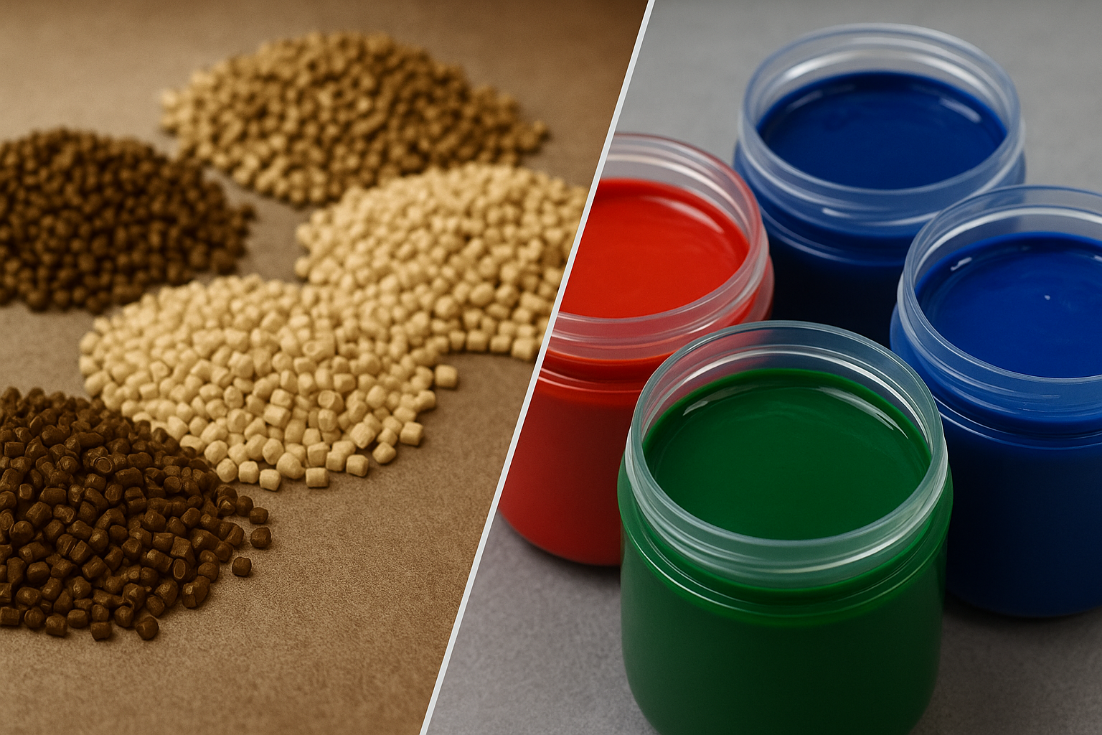
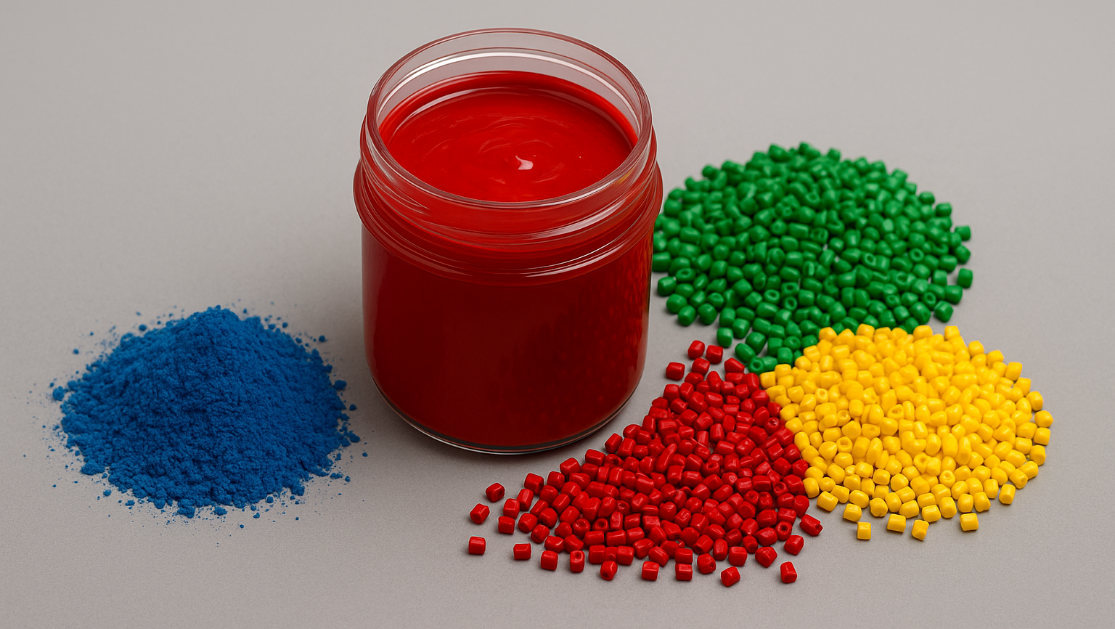
Colorants typically fall into one of three major categories:

Powder Color

This dry, free-flowing pigment powder is mixed directly with raw resin. While cost-effective and potent, it can be dusty and hard to handle, making it more suitable for certain high-volume or specialized applications.

All three serve the same fundamental purpose—coloring plastic—but they each come with different equipment needs, processing behaviors, aesthetic outcomes, and impacts on cost, scrap, and production flexibility.

If you’ve only worked with one type of colorant, it’s easy to assume that’s just “how it’s done.” But processors often discover that switching to a different system can unlock better performance or economics. That’s why a clear understanding of how each type works is so important.

In the sections that follow, we’ll explore each method in detail—how it’s delivered, how it behaves in real-world processing environments, and the key pros and cons you’ll want to weigh.

Powder Color: Where It All Started (But Rarely Ends Up Today

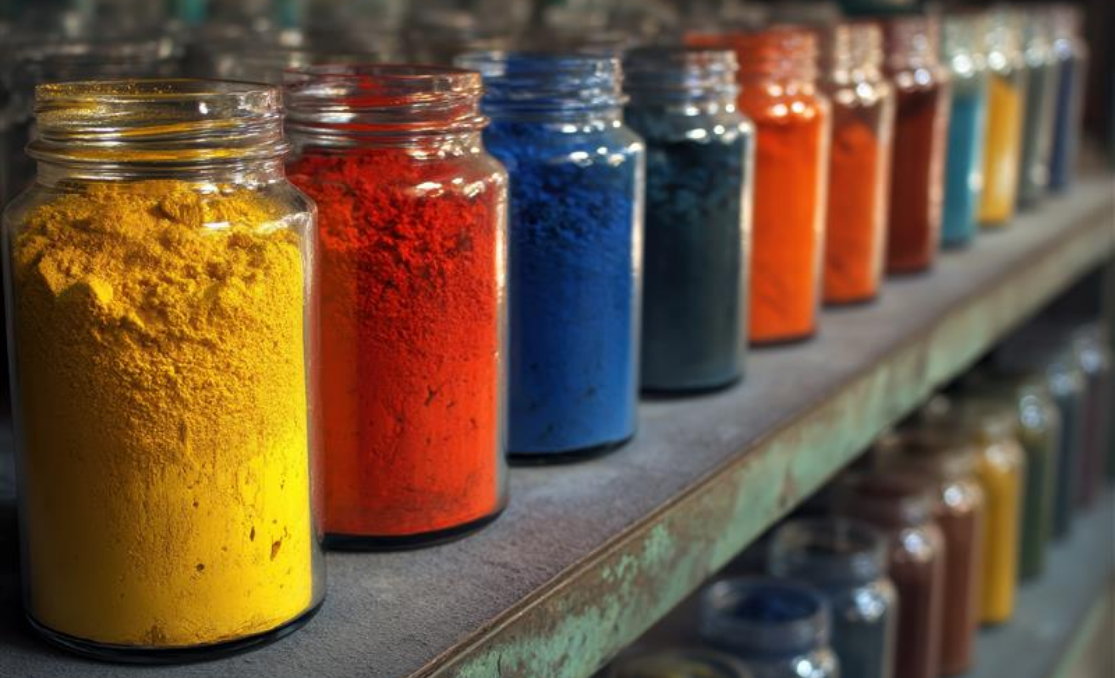
If you go back far enough in plastics processing, you’ll run into powder color. For a long me, it was the go-to solution: just pigment in its purest form, mixed directly into the base resin. No carrier pellets, no liquid suspensions…just color.

And to be fair, powder color still has its place. In some large-scale operations or specialized processes, it can be incredibly cost-effective and deliver intense coloration at very low usage rates. There’s something appealing about its simplicity: no melting, no suspension—just raw pigment ready to blend.

But there’s a reason powder color has mostly fallen out of favor—especially in North America and Europe.

Why It’s Been Phased Out

The core problem with powder color isn’t performance. It’s practicality. Most modern processors have steered away from it due to:

  • Dust and handling hazards: Airborne pigment particles aren’t just a cleanup nightmare, they’re a serious health and safety issue.
  • Regulatory pressure: OSHA and other workplace safety standards have made it increasingly difficult (and expensive) to run a clean, compliant operation when powders are in use.
  • Inconsistent blending: Getting a perfectly even mix of dry pigment and resin takes precise control and equipment. Even then, results can be unpredictable.
  • Cross-contamination risks: Powder sticks to everything. Switching colors often means a full teardown and deep clean—costing me, labor, and lost production.

These challenges have pushed most processors toward cleaner, more controlled colorant formats.

That said, powder color hasn’t disappeared entirely. In high-volume environments, especially where the same color runs 24/7, it can still make economic sense. Some processors even use it as a pigment source to make their own masterbatch.

But for the vast majority of operations today, powder color is a relic of an earlier era: a chapter that helped write the book on plastic coloration, but one that’s mostly been closed.

Masterbatch: The Longtime Industry Standard

Masterbatch is the most commonly used method of coloring plastic today. And for good reason: it’s been around for decades, it’s easy to handle, and it integrates seamlessly into most existing systems.

At its core, masterbatch is a pre-mixed concentrate of color pigments (and sometimes additives) encapsulated in a carrier resin. These little pellets are typically dosed into your natural resin at the machine’s throat, typically from 1% to 5% of the total formulation, then melted and blended as part of the normal processing cycle.

Why It’s Popular

The appeal of masterbatch lies in its simplicity and predictability. It’s:

  • Easy to handle with common equipment — it requires blenders or feeders but many processors already have this equipment in place.
  • Stable and clean — the pigment is locked into a solid form, so there’s no risk of spills or separation.
  • Broadly compatible — with many different base resins and processing environments

If you’ve got a process that’s working and your color expectations are being met, it can be hard to justify changing something that isn’t broken. That’s why masterbatch continues to dominate the landscape: it works, and it’s familiar.

But There Are Some Trade-Offs

Despite its popularity, masterbatch isn’t perfect. Over time, many processors start to notice issues that impact efficiency, consistency, and cost.

  • High let-down ratios. Masterbatch often requires more colorant per part than other methods,especially when color strength or coverage is critical. This can increase cost over time.
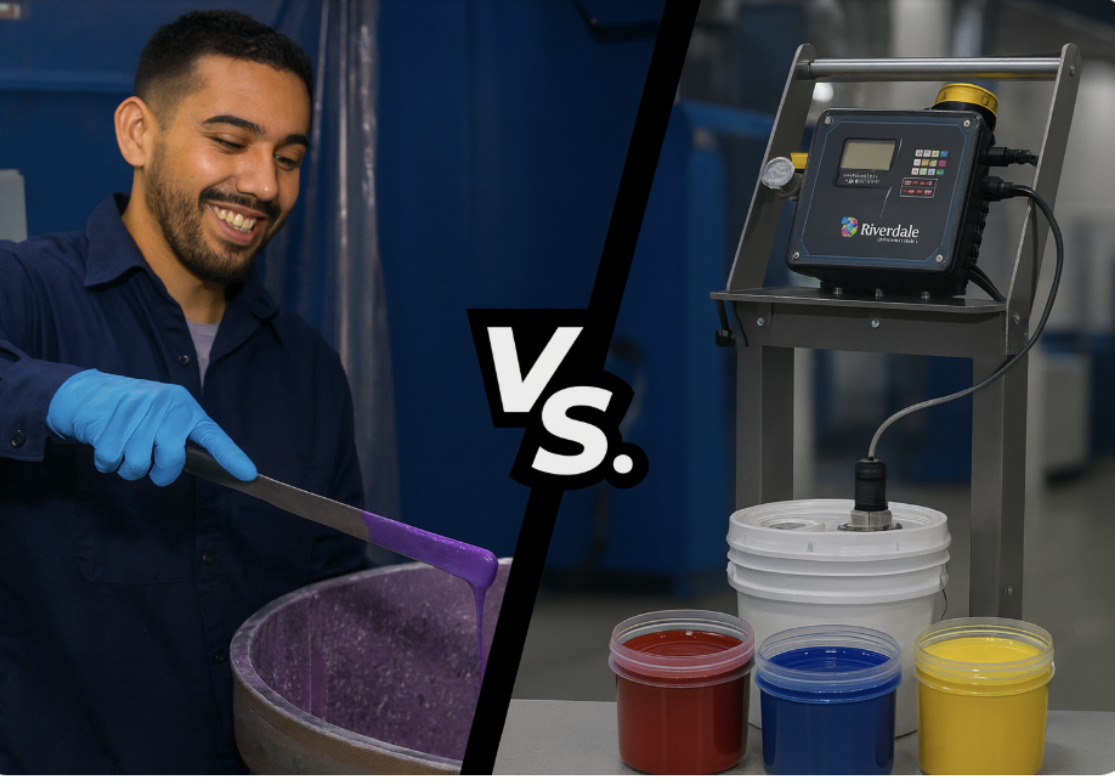
  • Slow color changes. Changing colors with masterbatch means stopping production, purging hoppers and screws, and running material until the new color comes through cleanly. Depending on the process, this can take significant time and generate a lot of scrap.
  • Clingers and streaking. It’s common for bits of masterbatch, called clingers, to stick to the inside of the hopper or feed throat. These clumps may break loose long after a purge is complete, creating streaks or defects in parts that were supposed to be a new color. This leads to unpredictable quality and rework.
  • Impact on dispersion and appearance. When the masterbatch carrier resin doesn’t fully match the base resin, it can affect how evenly the color disperses, how the material melts, and the final surface appearance of the part
  • Storage headaches. Masterbatch often requires separate formulations for each base resin. So, the same color across three resins could mean three different masterbatch SKUs. That adds up to more bins, more pallet space, and a more cluttered inventory compared to methods that can oen cover multiple resins with a single formulation.
  • Excessive handling. Managing bags, scoops, blenders, and vacuum probes…along with frequent dosing adjustments, adds to operator workload and creates more opportunities for errors or material mix ups.
  • Long lead times. Custom masterbatch often takes longer to produce — four weeks or more compared to about one to two weeks for other methods — slowing down new color approvals or production changes.
  • Tiered pricing pressures. To get competitive pricing, processors often have to place larger orders than they really need, which ties up cash flow and increases storage demands.

In short, while masterbatch works for many applications, it’s not always the best fit—especially in high-precision, high-speed, or high-changeover environments. And that’s when processors start looking for smarter, cleaner, and more cost-effective alternatives.

Rethinking Colorant: Why More Processors Are Turning to Liquid Color

Masterbatch may still be the dominant method, but it’s no longer the only serious option. As more processors aim for tighter tolerances, faster color changes, and lower operating costs, liquid color has gained real momentum…and for good reason.

What Is Liquid Color?

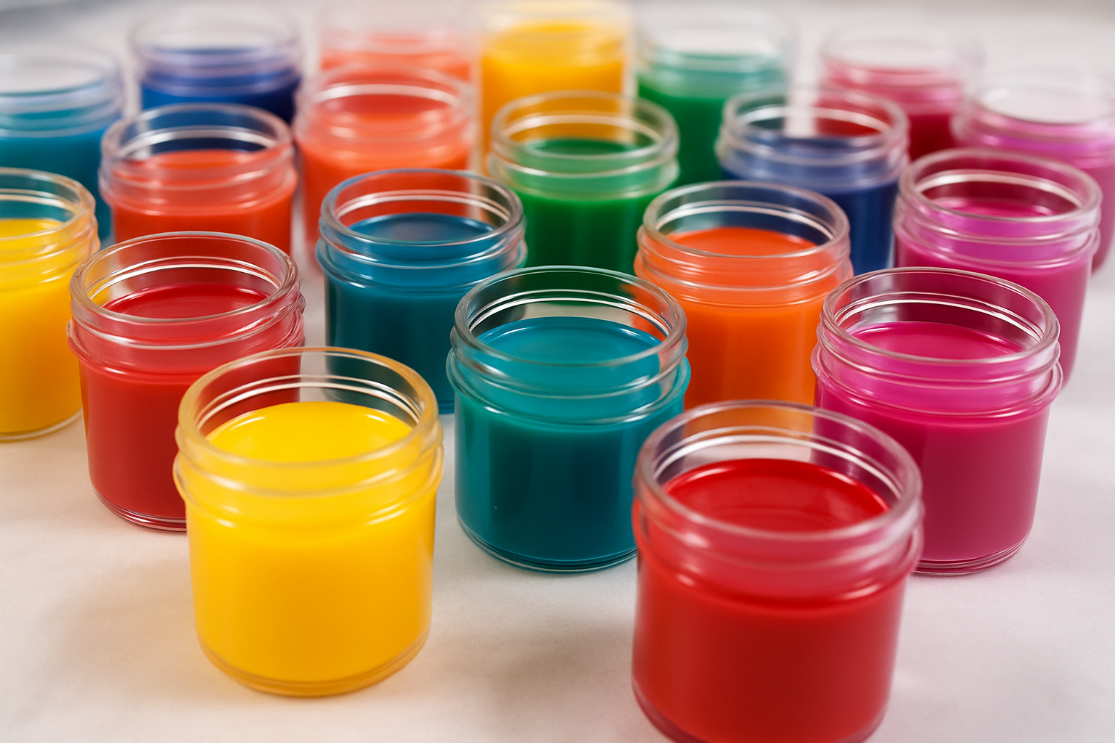
Liquid color is exactly what it sounds like: a fluid formulation of pigments or dyes, typically suspended in a carefully engineered carrier. That carrier is designed for broad compatibility with a wide range of base resins, ensuring smooth dispersion and consistent color throughout the part.

Instead of dosing plastic pellets into your hopper, as you would with masterbatch, liquid color is introduced directly at the feed throat. A small metering pump delivers the precise amount of color at the right time, giving you cleaner transitions, tighter control, and less waste.

Liquid color isn’t new. It’s been around for decades, but for a long time, it was treated as niche… often used in low-volume applications with lots of changeovers, or in very specific proprietary setups. That reputation stuck for years, driven largely by early technology limitations and messy application experiences that gave it a bad name.

But the game has changed.

Thanks to major advancements in metering technology, closed-loop controls, and carrier chemistry, modern liquid color has evolved into something far more powerful: a clean, efficient, and highly precise alternative to traditional coloring methods.

And when it’s done right, by the right supplier, it can completely transform your process.

The Misconceptions: Why People Think They Can’t Use It

Here’s where things get interesting…and where perception often diverges from reality.

“We can’t use liquid color. Our machines aren’t set up for it.”
“We tried it once. It was a mess.”
“We’ve always used masterbatch. This would be a huge change.”

These reactions are incredibly common…and they’re also incredibly outdated.

A lot of the resistance stems from experiences that are 20, even 30 years old. Back then, it’s true: liquid color could be a pain. It was messy. It required custom setups. And if you didn’t have the right partner or the right formulation, it could leave you with clogged nozzles, messy spills, or inconsistent color. In other words, it just wasn’t worth the trouble.

But that’s not the case anymore.

Today’s liquid color systems are engineered for plug-and-play compatibility with injection molding, extrusion, and blow molding processes. The equipment is cleaner, smarter, and easier to use than ever before. You don’t need to retool your machines. You don’t need to overhaul your process. And you don’t need to be a liquid color expert to run it successfully.

The problem is, many processors don’t realize that. They’re still operating on old information… or worse, they’ve been actively discouraged from trying liquid color by suppliers who have a vested interest in keeping them locked into masterbatch.

The Reality: It Can Work on Your Machine

This one deserves to be said clearly and boldly:

It doesn’t matter if you’re running an injection molding press, an extruder, or a blow molding line — the idea that your machine “isn’t compatible” with liquid color is almost always false. In fact, it’s one of the most persistent myths in the industry.

Engineers will sometimes swear up and down that it’s impossible. They’ll say the screws aren’t right, or the machine throat is too tight, or the dosing point is in the wrong place. But in nearly every case, those objections melt away once someone with real liquid color experience takes a look.

The truth is, modern liquid color systems are highly adaptable. They’ve been designed with enough flexibility to work with just about any standard plastics processing setup. What it really comes down to isn’t compatibility…it’s familiarity.

Most processors are just more comfortable with what they know. And most suppliers aren’t doing anything to change that. In fact, if your current supplier also sells masterbatch, they may have no real incentive to help you switch…especially when they’re making more money selling you 5% letdown ratios of pelletized colorant than they would on ultra-efficient liquid dosing.

So if you’ve been told that liquid color “won’t work” in your facility, it might be time to ask: Is that true… or just convenient for someone else?

The Benefits of Liquid Color – When Done Right

Once you get past the outdated assumptions, the benefits of liquid color start to speak for themselves. When done right, with the right technology and the right support, it can completely outperform masterbatch across multiple dimensions:

  • Lower Usage Rates
    Liquid color is often dosed at much lower let-down ratios than masterbatch. Instead of 3–5%, you might be using 0.1–1%. That’s a huge savings in raw material costs, especially over time.
  • Faster Color Changeovers
    Because the pigment isn’t locked into a solid carrier that clings to your screw or hopper, liquid color purges faster and more completely. That means less downtime, less scrap, and quicker transitions between jobs.
  • Improved Color Consistency
    Modern liquid metering systems are incredibly precise, often far more consistent than volumetric feeders used for masterbatch. You get tighter control over shade and opacity, with fewer surprises mid-run.
  • Cleaner Processing (Yes, Really)
    With a closed-loop pump system and spill-proof connections, a well-designed liquid color setup can actually be cleaner than handling dusty powders or scooping pellets. No dust. No clingers. No color-streaked floors.
  • Smaller Footprint
    Liquid color doesn’t require huge storage rooms full of bins and boxes. You can store and change out colors quickly, even in tight production environments.
  • Reduced Energy Usage & Increased Throughput
    The liquid itself acts as a flow modifier, reducing friction in the process and cutting energy demand — often by around 16%. Many extrusion processors don’t just bank that energy savings; they use it to run machines faster, increasing output and producing more parts in the same amount of time.
  • Better Part Performance
    Liquid color carriers are engineered for broad compatibility across many base resins, which helps avoid issues that can crop up when a masterbatch carrier isn’t well suited to the material. That broad compatibility can lead to more consistent physical properties, improved optical clarity, and beer pigment dispersion, which enhances overall part quality.
  • Cleaner Purges & Fewer Streaks
    Masterbatch can leave behind pigment “clingers” that hang on through multiple runs, leading to surprise color streaks hours (or even days) later. Liquid color, especially when formulated for clean purging, doesn’t hang around. It’s in, out, and done.

These aren’t fringe benefits. They go straight to your bottom line: faster setups, lower scrap, fewer headaches, and real cost savings. And that’s just the start.

Where Liquid Color Fits Best

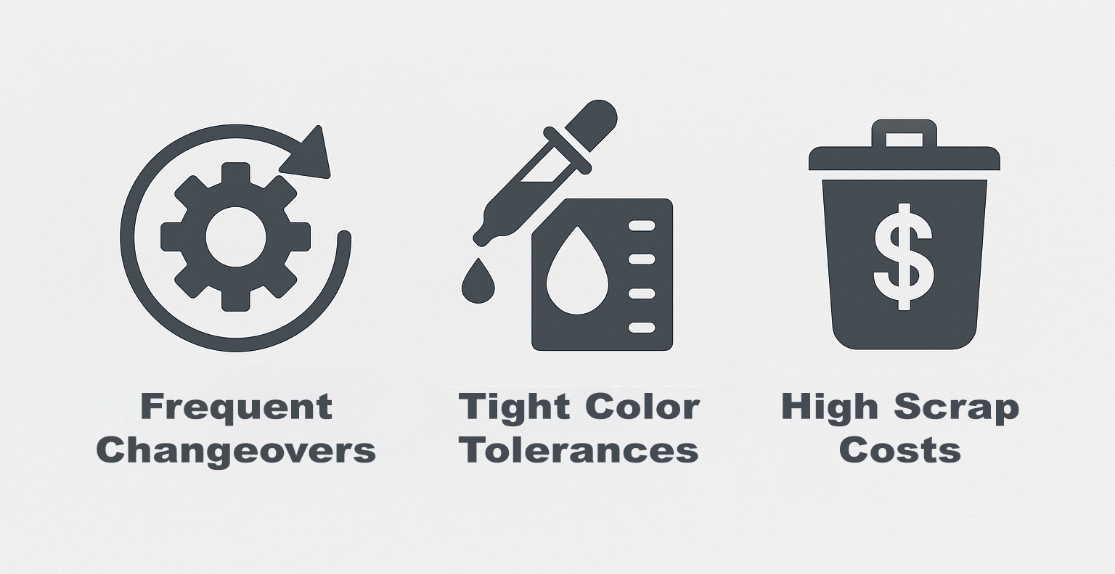
Liquid color delivers its biggest wins in operations with frequent changeovers, tight color tolerances, and high scrap costs from purges. Processors making their own parts, where they control specs and materials, often see the fastest ROI because they can adopt new methods without needing outside customer approvals.

Where might it be less ideal?

Certain applications, like some blown film lines, are more sensitive to even slight variations in material flow and additives. Those processors typically run under extremely tight tolerances, so liquid color isn’t usually recommended there.

Bottom line: for most injection molding, extrusion, and blow molding operations where you control your own process, liquid color is not just viable, it’s often the smarter, leaner way to run.

Not All Liquid Color Is Created Equal

By now, liquid color might be sounding like a no-brainer. But here’s where it gets important: not all liquid color is the same.

Some suppliers offer liquid color as a sidecar, just to check a box. They’ll say, “Sure, we can sell you liquid,” but their systems are outdated, their formulations aren’t optimized, and their support stops once the drum hits your dock. In reality, many of these companies don’t actually want you to switch to liquid color…they just want to make sure you don’t go looking somewhere else. Their real business is masterbatch.

Why? Because masterbatch is often far more profitable for them. The higher let-down ratios mean more colorant sold per part. The recurring need to purge and replace means more volume moving through your facility. So even though liquid color could save you time and money, they have every incentive to steer you back to pellets.

  • “Liquid’s too messy.”
  • “You’ll never get it to dose consistently.”
  • “It’s just not right for your process.”

Sound familiar?

This is where the industry gets murky. Because true liquid color isn’t just about the colorant, it’s about the full system: formulation, delivery, integration, and ongoing support. If any of that falls short, the whole experience suffers. And that’s exactly why so many processors tried liquid color once… and swore they’d never try it again.

But that doesn’t mean liquid color doesn’t work.

It means bad liquid color doesn’t work

The Riverdale Difference: Purpose-Built for Performance

At Riverdale Global, we didn’t tack on liquid color to round out our catalog…we built our entire business around it.

Some suppliers offer liquid color as a sidecar, just to check a box. They’ll say, “Sure, we can sell you liquid,” but their systems are outdated, their formulations aren’t optimized, and their support stops once the drum hits your dock. In reality, many of these companies don’t actually want you to switch to liquid color…they just want to make sure you don’t go looking somewhere else. Their real business is masterbatch.

That matters. Because when a supplier is fully invested in one technology, they have every reason to innovate, refine, and perfect it. And Riverdale has done just that.

Some suppliers offer liquid color as a sidecar, just to check a box. They’ll say, “Sure, we can sell you liquid,” but their systems are outdated, their formulations aren’t optimized, and their support stops once the drum hits your dock. In reality, many of these companies don’t actually want you to switch to liquid color…they just want to make sure you don’t go looking somewhere else. Their real business is masterbatch.

That matters. Because when a supplier is fully invested in one technology, they have every reason to innovate, refine, and perfect it. And Riverdale has done just that.

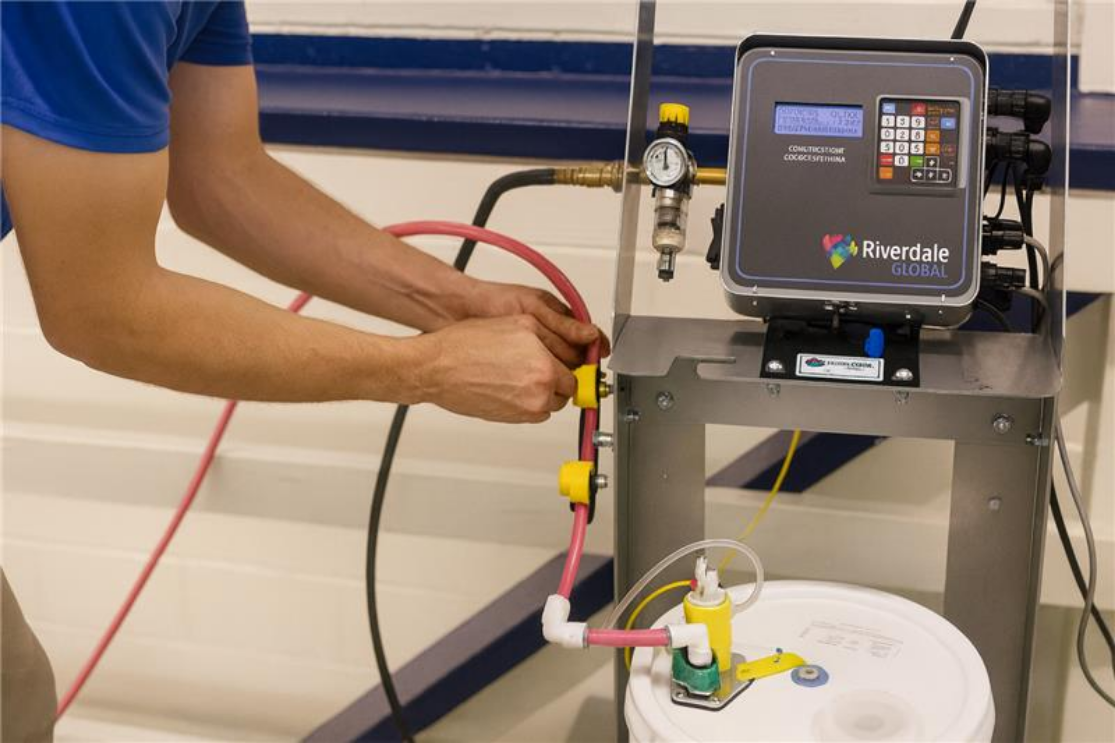
Our system is built from the ground up to address the exact issues that gave liquid color a bad reputation decades ago. This isn’t a dusty drum and a leaky pump. It’s a purpose-built, clean, closed-loop system that includes:

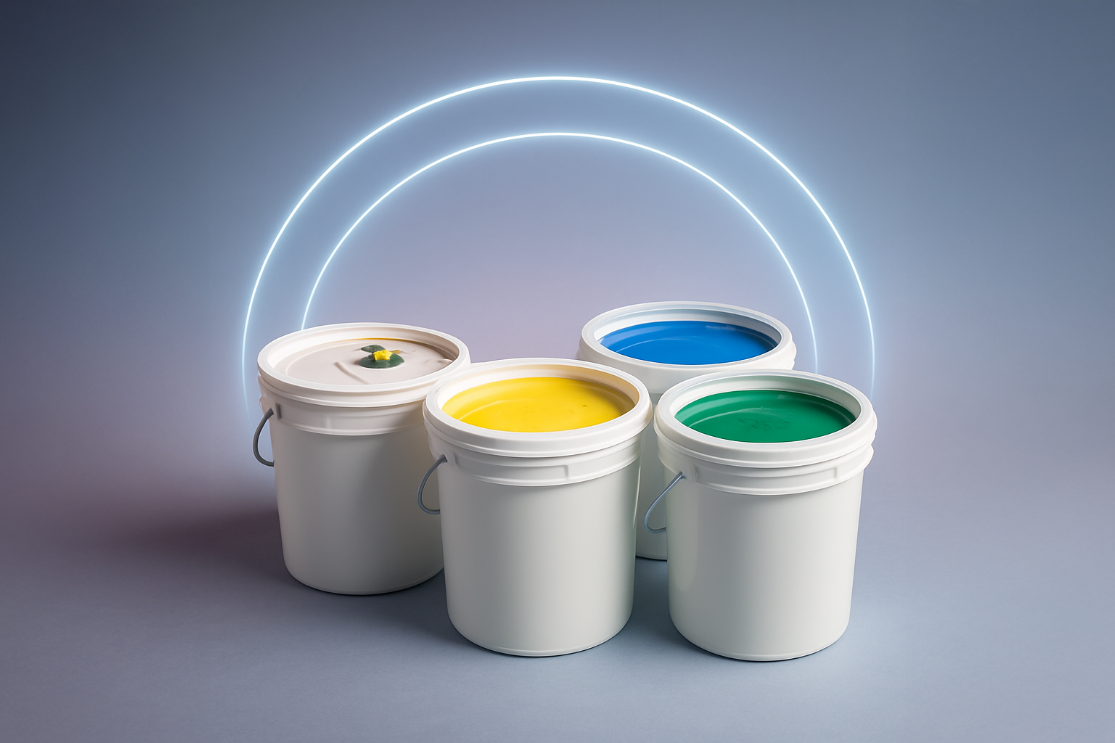
Pump In A Drum® (PIAD) and Pump In A Pail ® (PIAP) containers

each container arrives with the pump permanently built into the lid, creating a completely sealed system. Operators never have to open or reseal messy lids, which eliminates the spills, contamination risks, and handling headaches that gave liquid color a bad reputation in the past.

Advanced gravimetric metering pumps

designed for precision and repeatability — no guesswork, no manual adjustments

Clean, sealed connections

that prevent drips or spills during hookups and changeovers, keeping your floor and operators clean even when switching colors

Equipment packages

that are customized to your process, not just shipped with instructions and crossed fingers

And that’s just the hardware. On the formulation side, Riverdale’s colorants are:

  • Engineered for fast purging, minimizing downtime between jobs
  • Highly concentrated, so you use less and store less
  • Designed for compatibility, so you can hit regulatory and optical targets without introducingcarrier mismatch issues

But maybe most importantly, Riverdale doesn’t have a pellet to fall back on. We’re not pushing you toward masterbatch behind the scenes. Our success depends on your success with liquid color — full stop. That alignment is what makes the difference.

You’re not fighting inertia or trying to convince a rep who doesn’t believe in the product. You’re working with a team that has hundreds of successful installs, deep application experience, and a stake in getting it right.

We’ll Help You Try It — For Real

We know that making a change to your process — especially one that touches every part, every run, every shift — isn’t something you do lightly.

But if you’ve ever felt stuck dealing with:

  • Long purges
  • Dusty handling
  • nconsistent results
  • Rising color costs

…it might be time to take another look at liquid color…with a partner that’s built their entire business around getting it right.

We’ll help you run a real-world trial, no purchase required. That includes:

  • Free color matches and trials
  • No disruption to your workflow
  • Our sealed, closed-loop delivery system
  • All equipment provided at no cost — not just for the trial, but for as long as you’re running Riverdale color

That last part is important: You’re not buying equipment. You’re buying color. We provide the full system — including the clean, compact pump and our Pump-In-A-Drum (or Pump-In-A-Pail) containers — so you can run liquid color the way it’s meant to be run. No hidden costs. No extra complexity.

And here’s the best part: our Return-For-Refill TM (RFR) program means we’ll drop off your filled containers and pick them up when they’re empty… then clean, refill, and return them. You don’t deal with pail disposal, messy cleanup, or wasted product.

No retooling. No shutdowns. No guesswork.

Just a cleaner, simpler, more sustainable way to color plastic.

Let’s Start a Conversation

The right colorant partner doesn’t just drop off product. We work with you to rethink your process, uncover hidden inefficiencies, and get more value out of every shift…whether that means faster changeovers, less scrap, or more consistent color at a lower cost.

That’s how we operate at Riverdale Global.

If you’re ready to explore how our closed-loop liquid color system could fit into your operation, or just want to talk through your application, we’re here for that.

No pressure. No pushy sales pitch. Just experienced people who’ve seen it all and want to help you make the smartest move for your plant.

Let’s see what liquid color can do for your process.